Winter Travels 2026
Greetings from Montreal. Spring has sprung. Well ; according to the calendar anyways. In the midst of another snowstorm on this Sunday afternoon, it seems like it will never arrive. But hopes spring eternal, as they say.
I did however experience some milder weather in the recent past; travelling this Winter to Europe. I started out in Montpellier, France and managed to visit a plethora of churches and museums, do some cycling ,and attend a few films. When it wasn't raining. Seems we broke a 40 year record for rainfall during my visit.
Bailing out a few days early, I took the TGV to Switzerland . Lausanne more specifically. This city lies half-way between Geneva and Montreux ; nestled on the North side of Lake Geneva, and overlooks the far shore in all its alpine beauty.
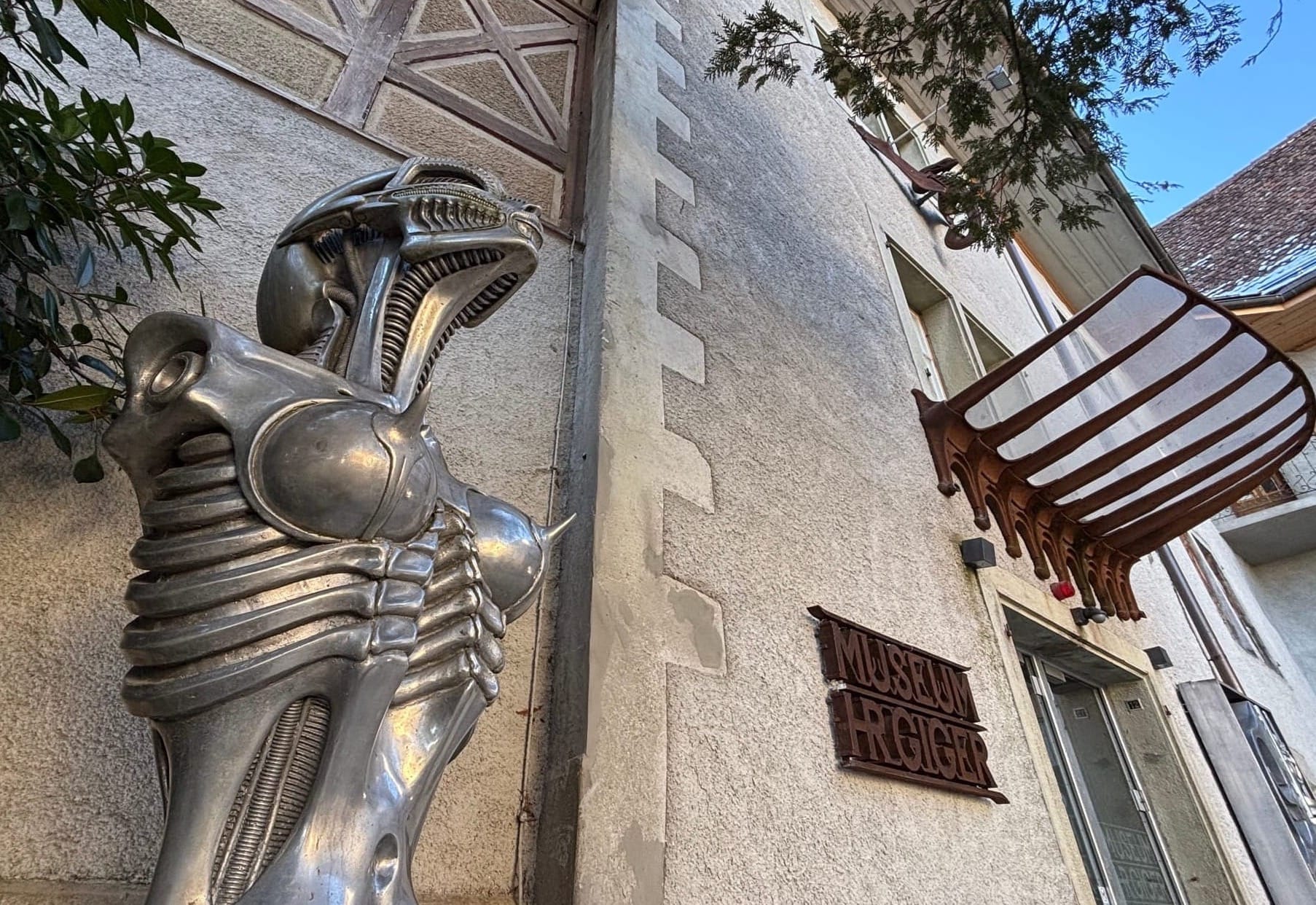
While in Switzerland ,I took a very scenic train journey to Gruyeres. Most well known for their cheese of the same name, this small, medieval village has another lesser known attraction. It is the H R Giger Museum and Cafe.
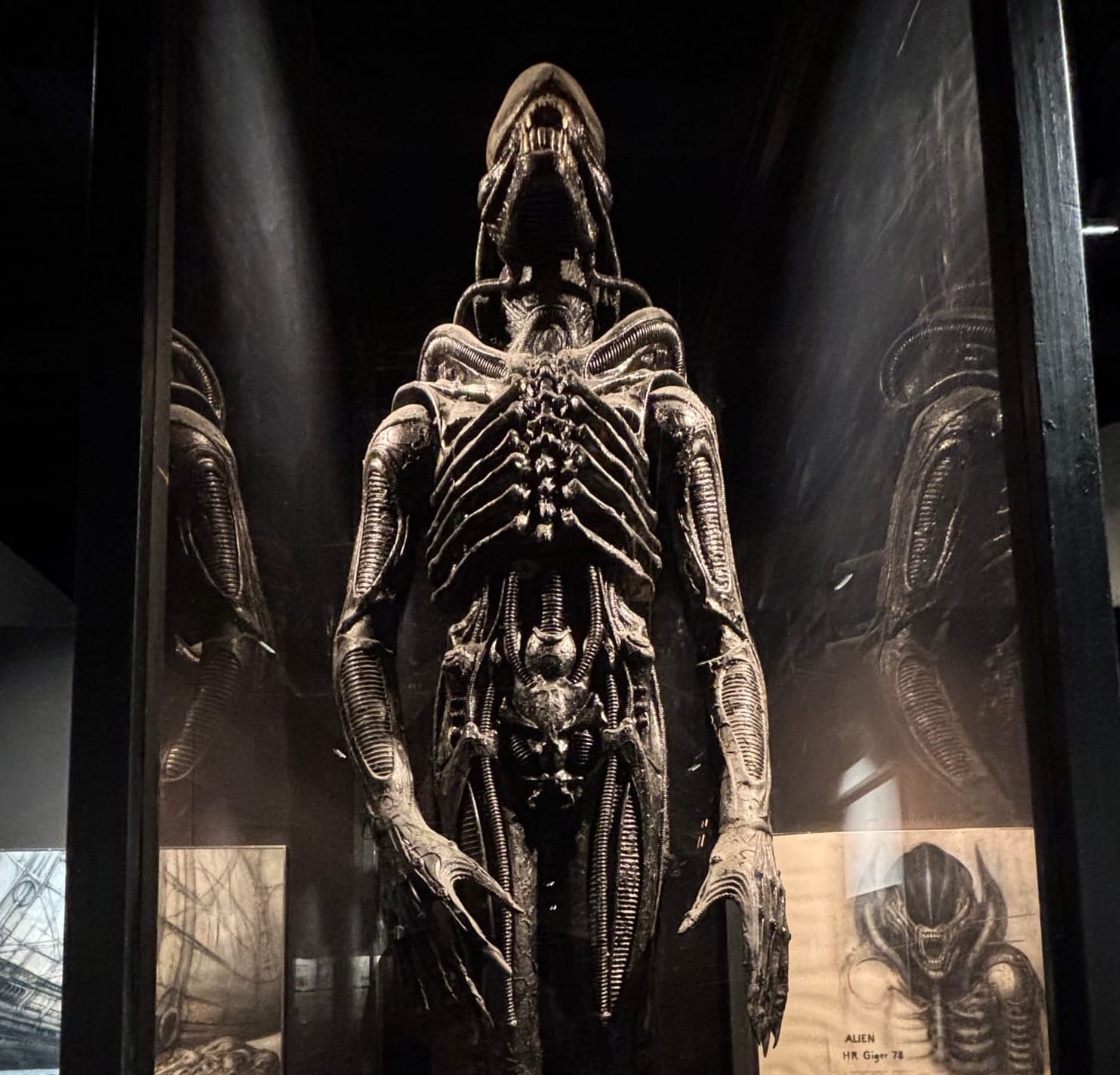
Giger was born in nearby Chur in 1940 and came to fame with the general public with the release of Ridley Scotts film: Alien in 1980. Not only did Giger design the iconic monster for the film , but the idea and sets were greatly influenced by Giger's 1977 publication: Necronomicon.
Giger's idea for a museum and cafe built upon the foundtions of his sculpture works, and a desire to extend his artistic vision beyond the confines of paper into the 3D reality of his surroundings. In 1988 he designed his first total environment, a Giger Bar in Tokyo, Japan. Followed in 2003 with the opening of a second bar in his hometown of Chur, Switzerland.
The HR Giger Museum, is a continuation of this concept and opened in 1998 in the Chateau St. Germain in the medieval city of Gruyères, Switzerland.This became the permanent home to the largest collection of Giger’s paintings, sculptures, furniture and film designs, dating from the early 1960's to his death in 2013.
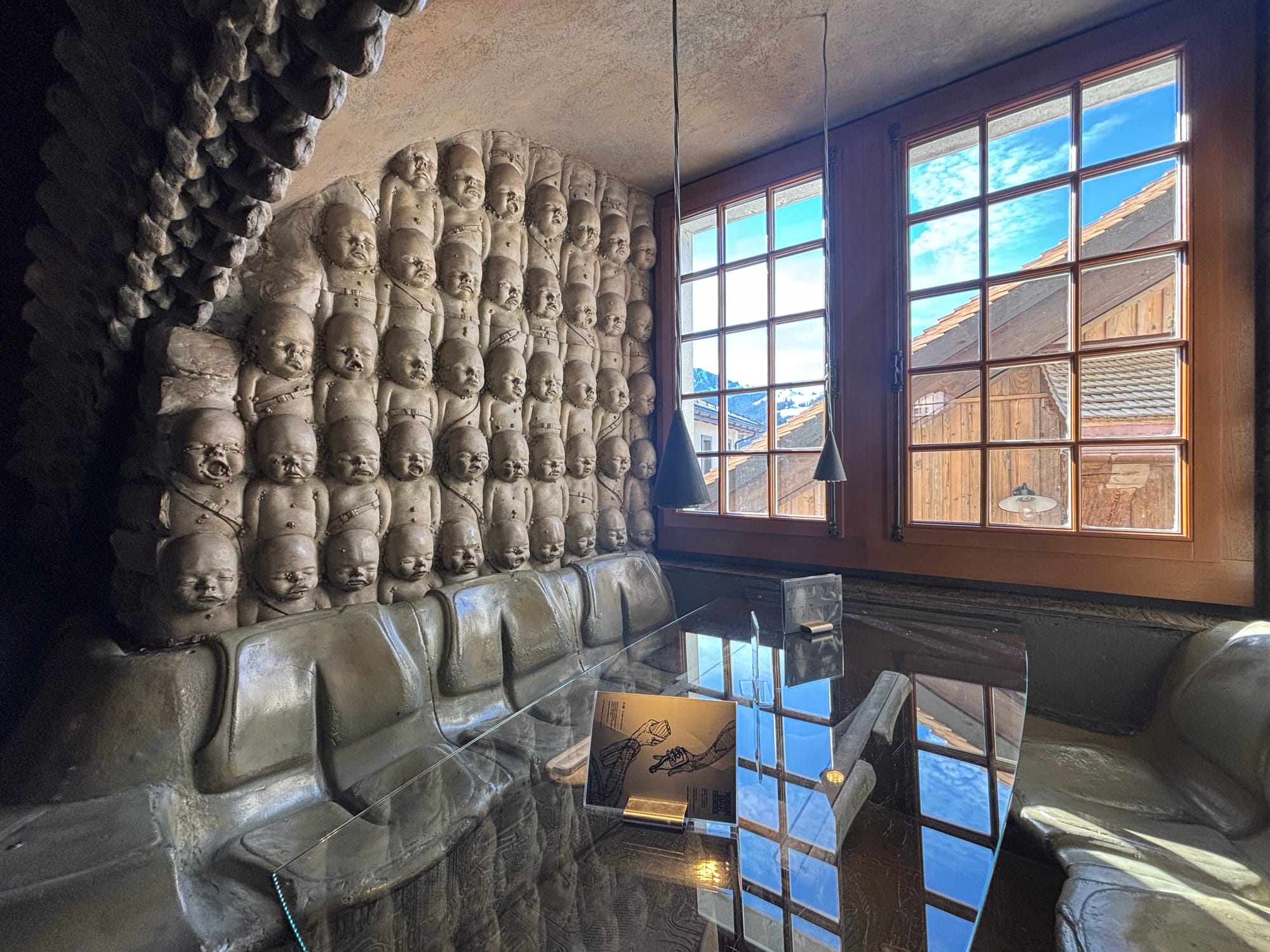
In the spring of 2003 Giger continued forward from his designs in Tokyo and Chur and unveiled the H.R. Giger Museum Bar, that sits adjacent to the Museum. His designs for the 400-year-old space emphasize its pre-existing Gothic architecture. Skeletal arches give the space a strange , yet cathedral like shape and aura. The designs extends beyond the structure right through to the bar, the seats and the tables. Total concept realization.
My initial thought were of the Old Testament story of Jonah and The Whale. Here , the patrons enter the front door , only to be swallowed into the belly of a monstrous sea creature. One that has been ossified and fossilized by centuries of time. Sitting here imbibing , a sense of unease never entered my person. More a feeling of awe and of being somehow transported to another time or dimension unseen in our everyday lives, yet somehow familiar.
Gruyere is an easy day trip from Lausanne or Bern- go there if you can. It's just like nothing on Earth.
Final stop on the trip was Rome, Italy. After a scenic yet complicated train journey from Lausanne, I eventually made it . Regardless of the existential madhouse of that was Termini Milan . Its usual fervour must have been dialled up a few notches, due to the Winter Olympics.
Or maybe it's always like that: an intense mass of humanity, shouting and pushing. The bureaucratic attendant who spent 45 minutes switching my ticket , he was right out of a nightmare.
Our communication was limited by my non-existent Italian language skills and his broken English ; but still we argued back and forth amid the din of the crowd , separated by the thickness of a thick plexiglass window. It was like I'd been dropped down by an alien spaceship right into the middle of a Fellini film. However Marcello Mastroianni was no where to be found.
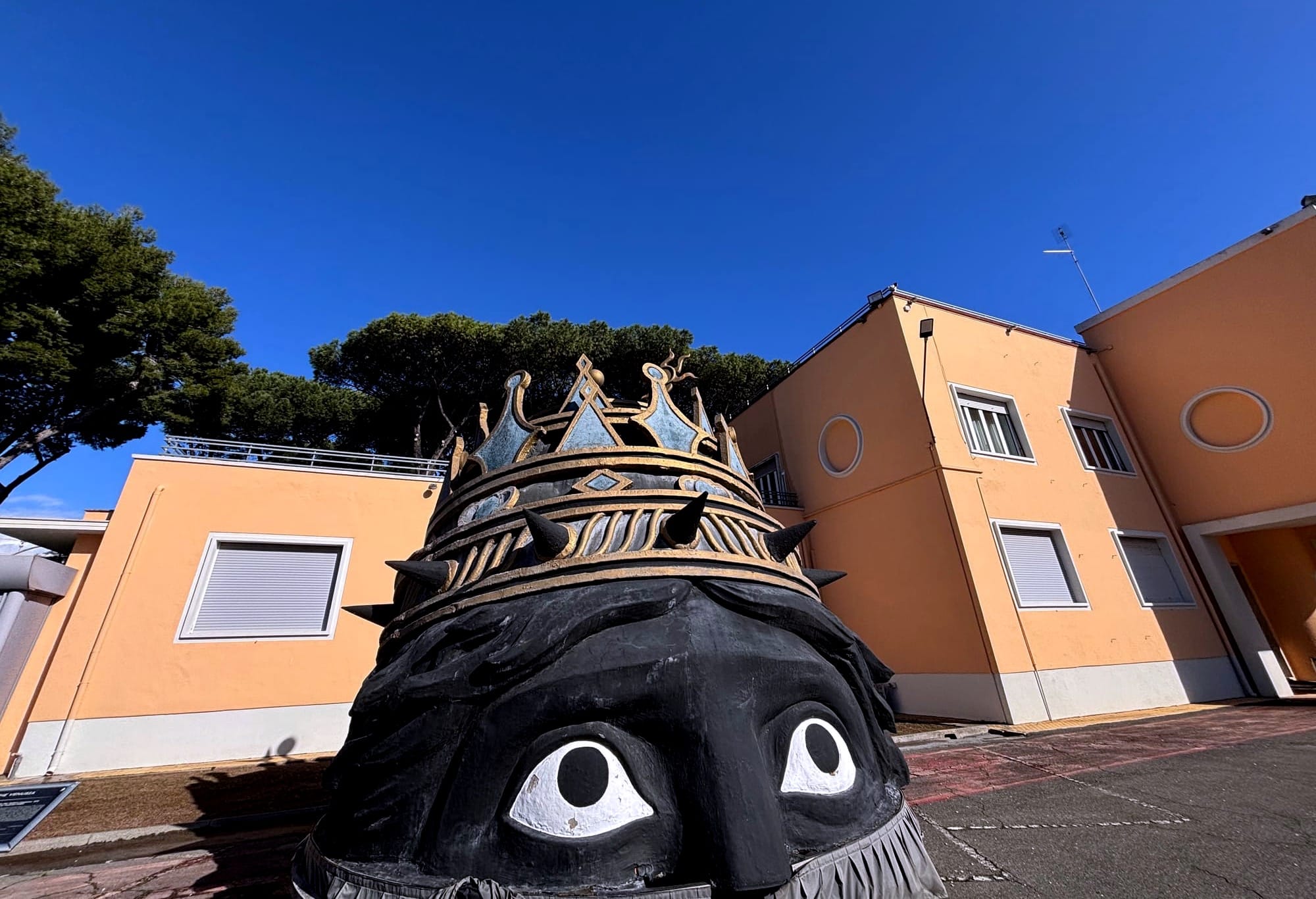
His ghost, however, seemed alive and well at Cinecitta Studios in the south end of Rome. This is the huge Italian national studio complex first envisioned by Fascist dictator Benito Mussolini. He oversaw it's construction in the early 1930's and officially inaugurated the studios in 1937.
However it wasn't until the post-war years that Cinecitta really came into its own. And Mussolini? Well , he missed out on the renaissance. He'd been hung by a meat-hook like a slaughtered pig in 1943 by Italian partisans. A fitting fate indeed; for a swine of a human-being.
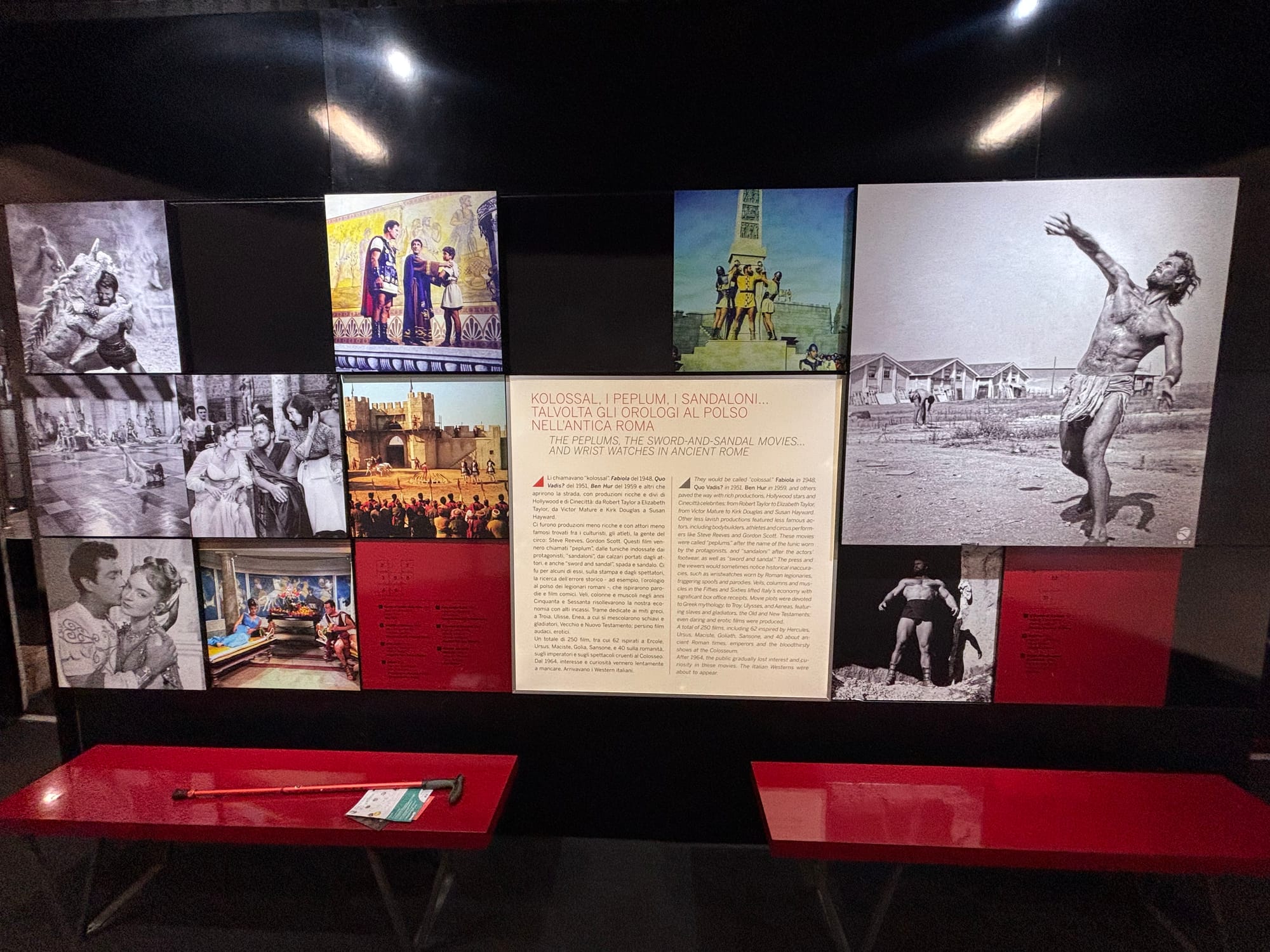
In the 1950's the studio became the home of the emerging Peplum (gladiator) genre, as well as drawing in big budget Hollywood productions such as Quo Vadis and Ben Hur. These expensive shoots earned the studio the nickname of Hollywood on the Tiber.
Bu the early 60s, the productions changed. With the box-office failure of Cleopatra, and the slow fade-out of the Peplum genre the studios became a home for newer genres of Italian film :from pulpy Spaghetti Westerns to the art-house cinema of Federico Fellini. As well , a steady stream of international productions continued to shoot in the complex.
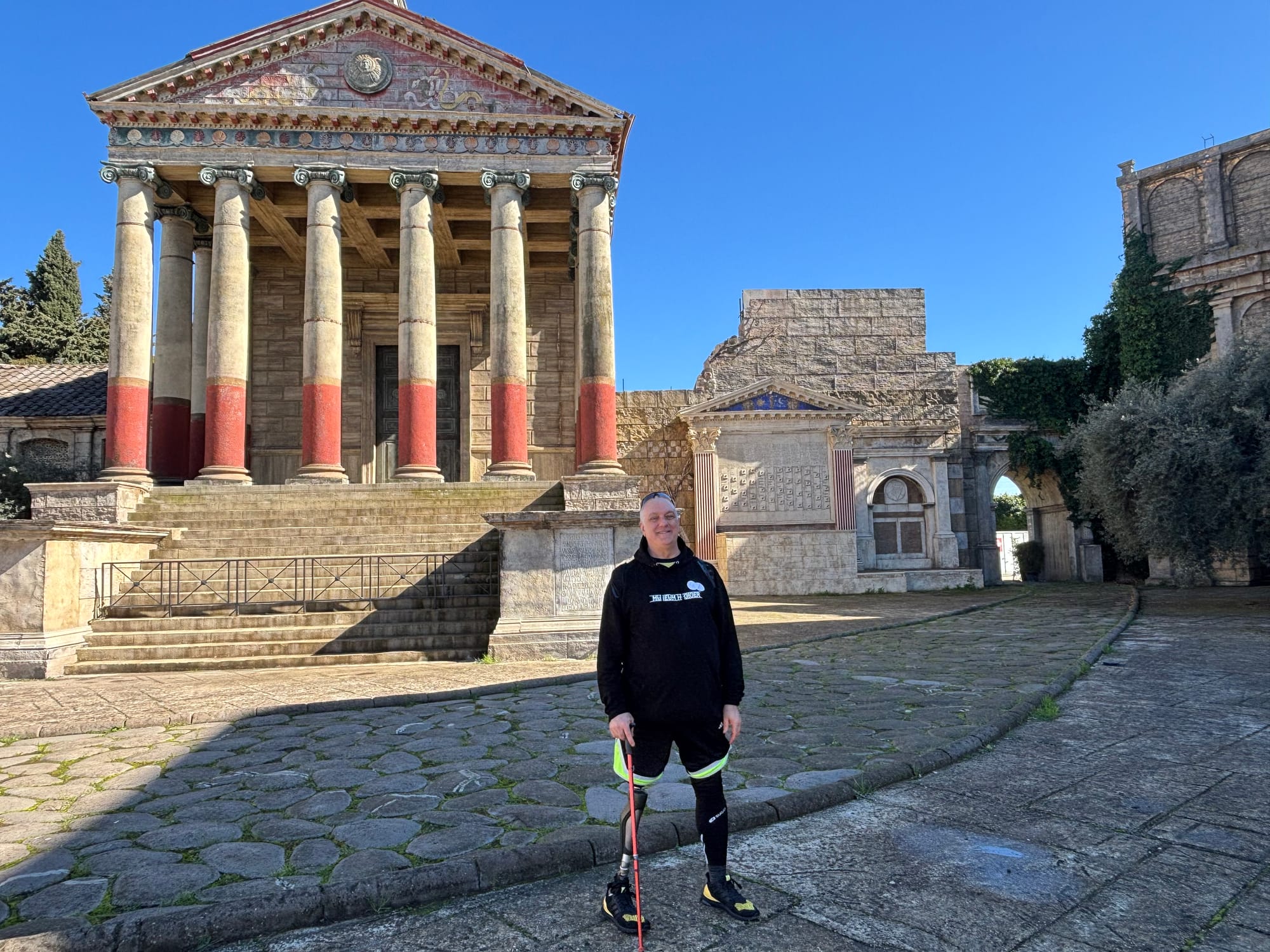
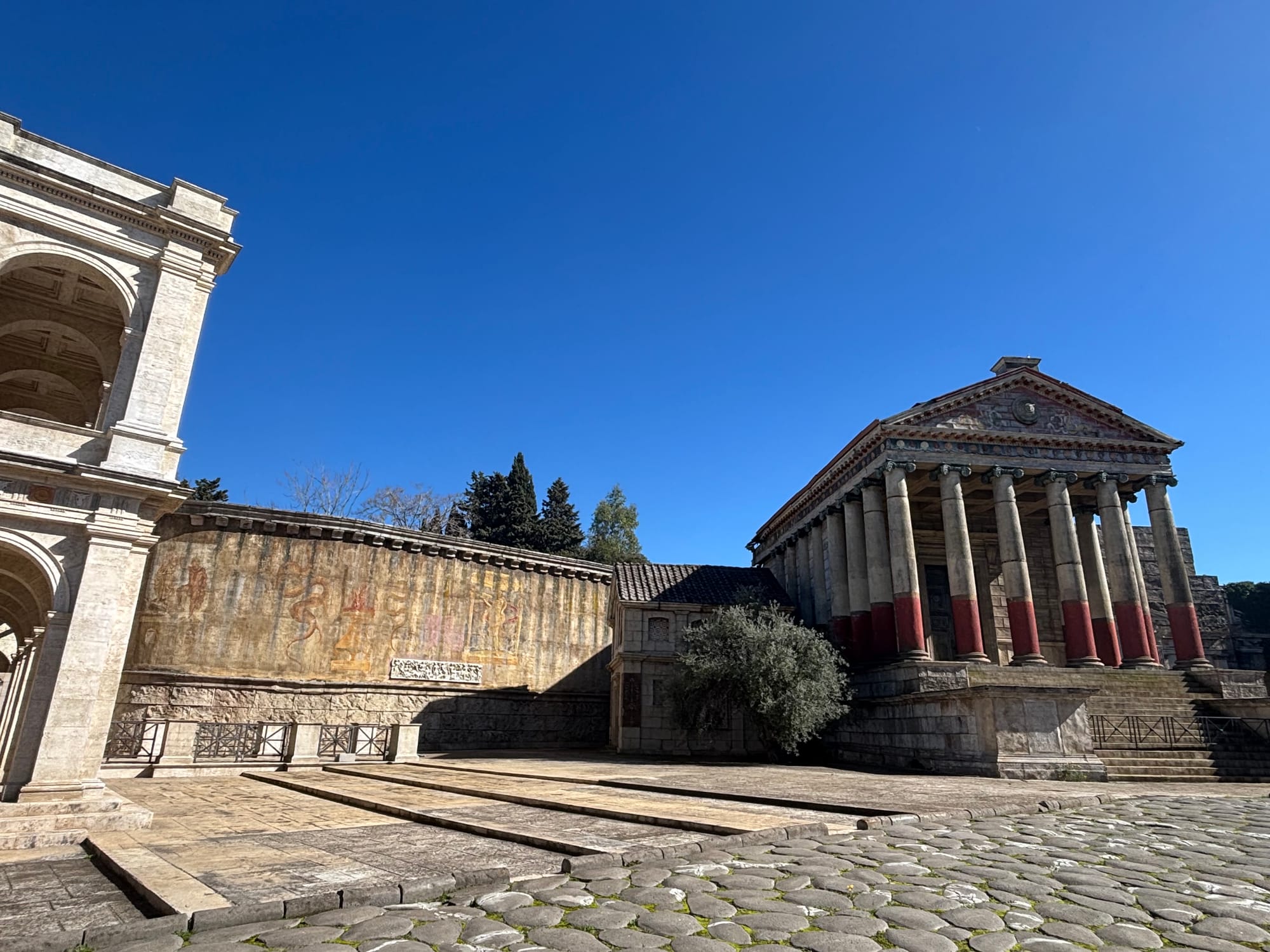
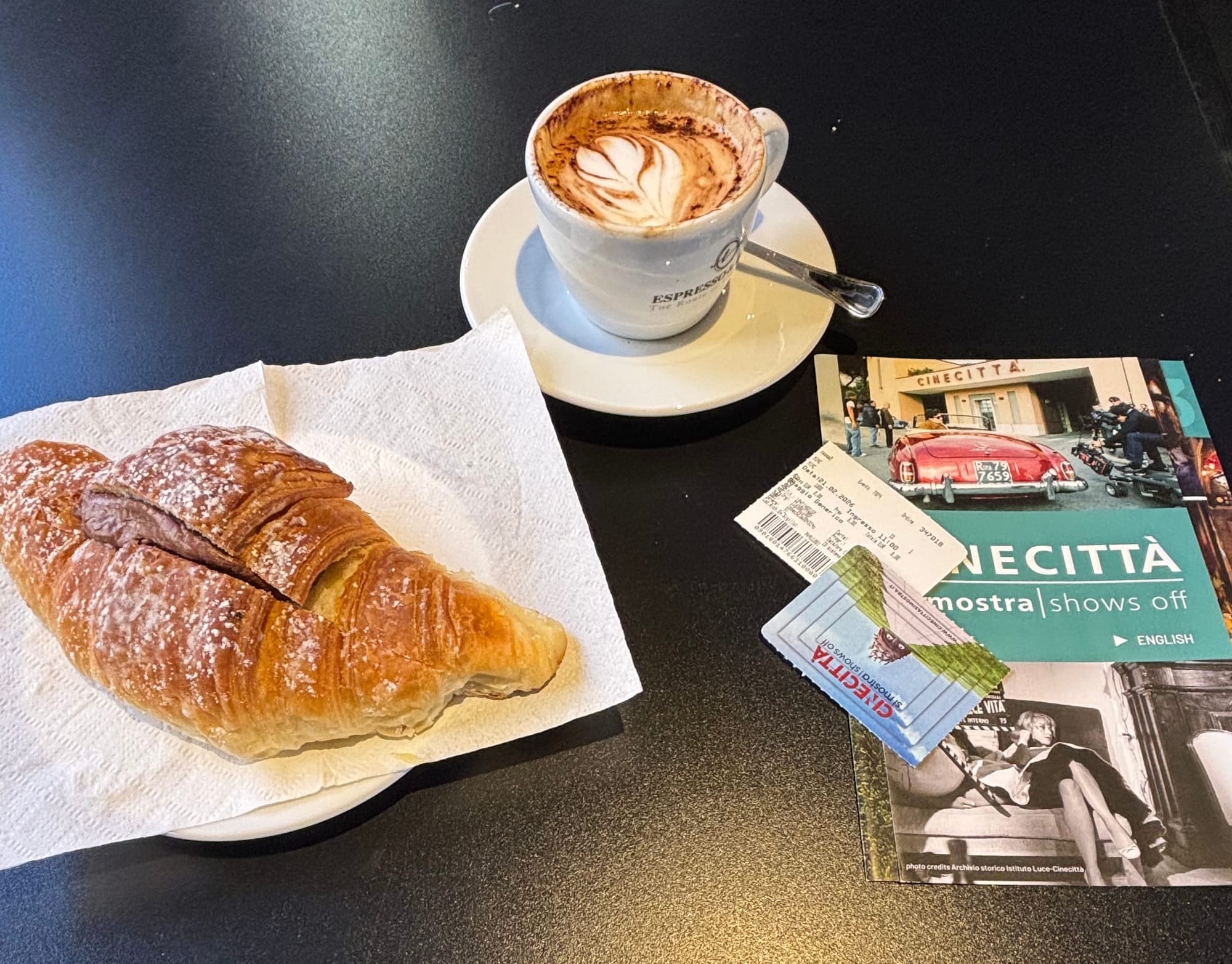
A studio tour of CineCitta includes a look at Fellini's "home" : Soundstage 5 , where he shot all his films. Plus the back-lot of ancient Rome is a sight to behold. A rather extensive museum is also on site, and a very excellent cafe and gift shop.

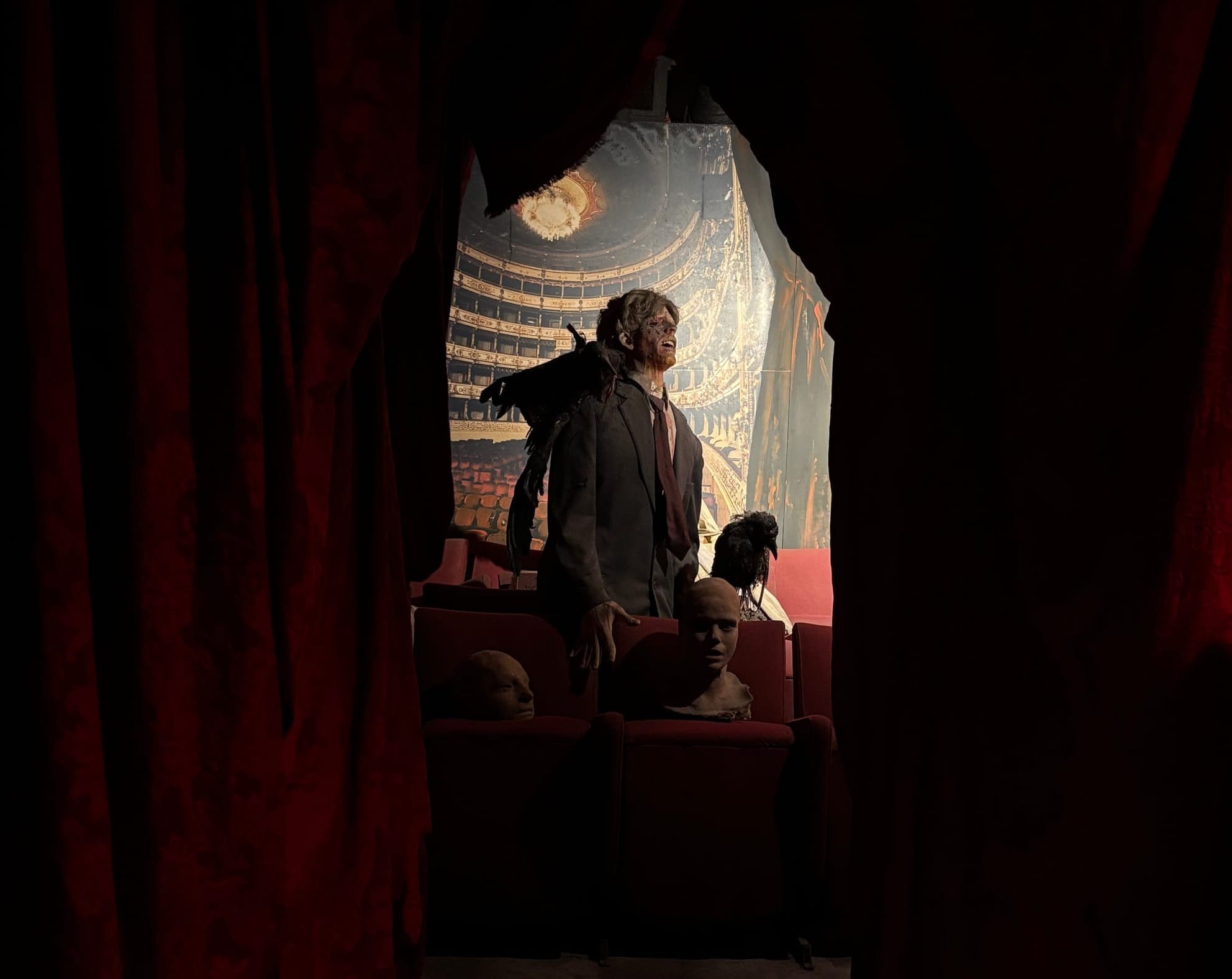
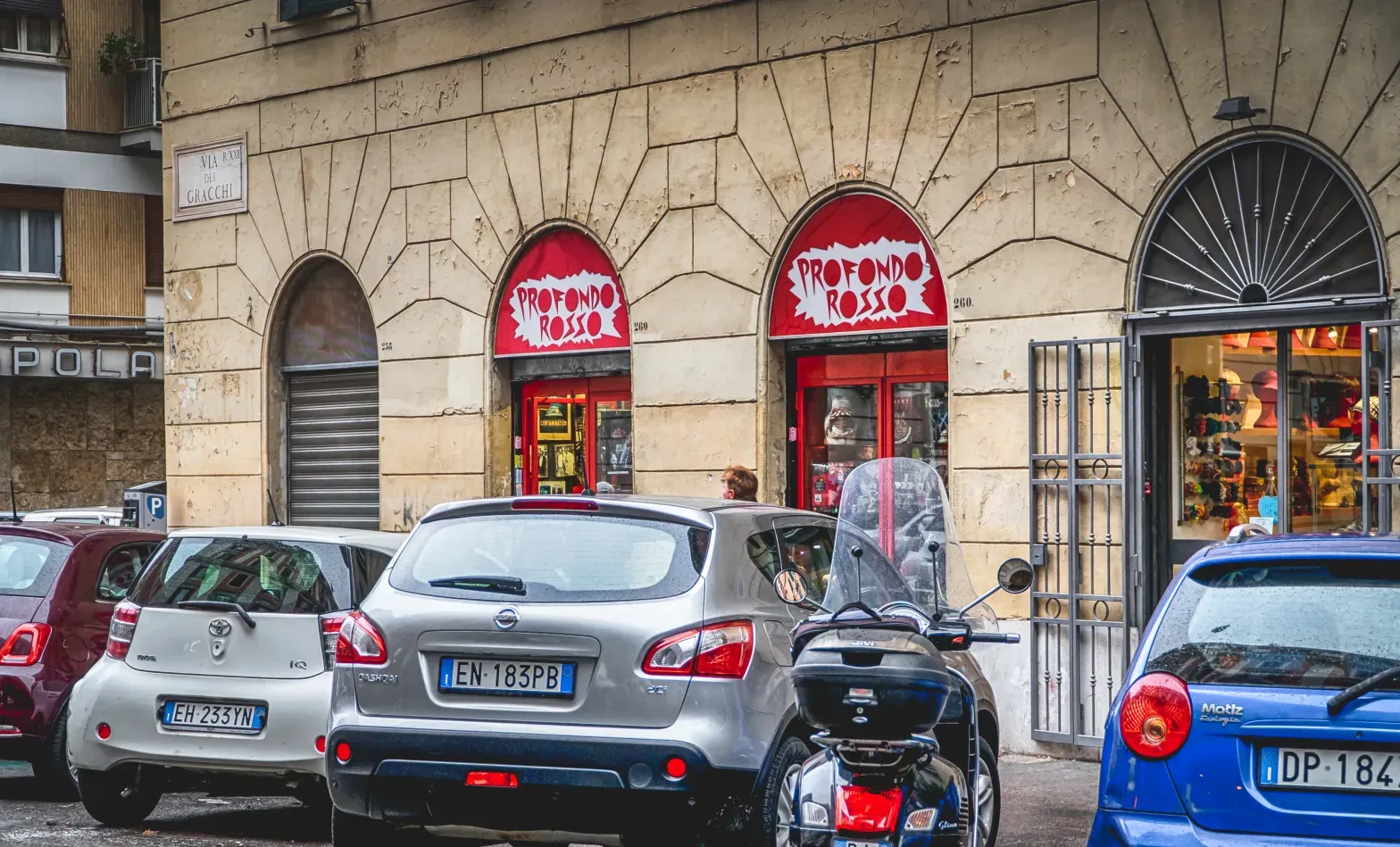
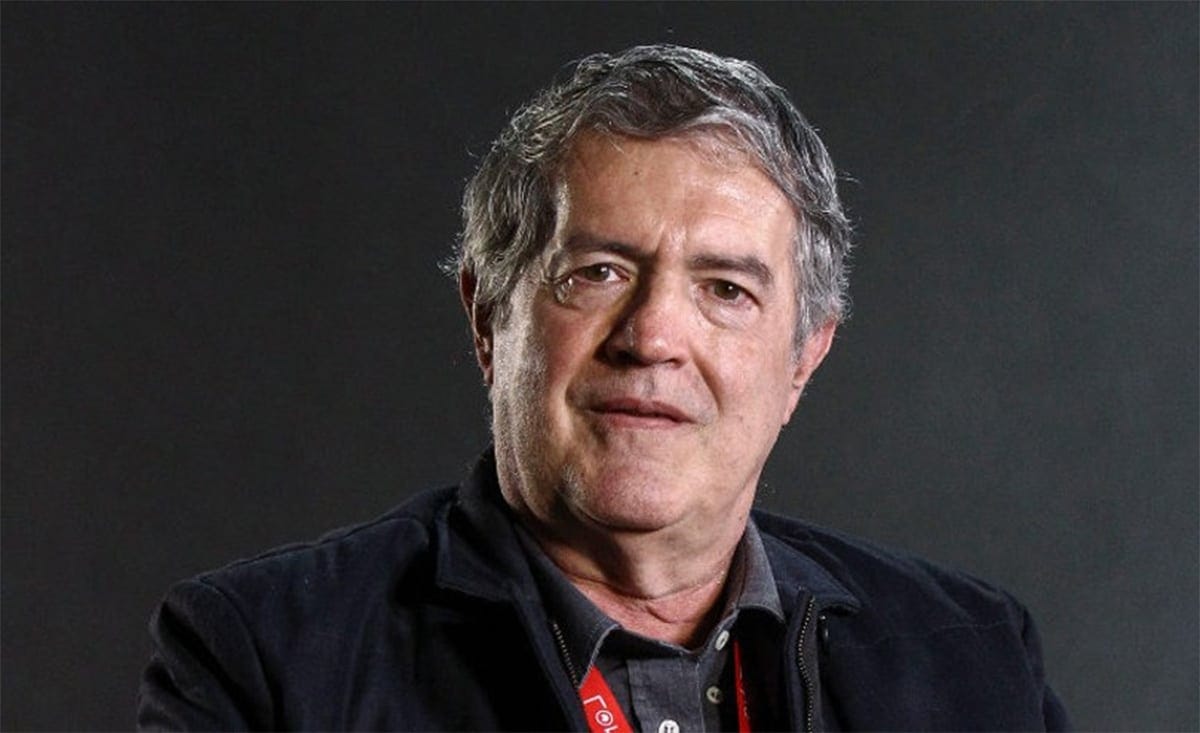
Rounding out the cinema side of the vacation was a trip to the Profondo Rossa shop and museum. Located in the Prati district of Rome ,the shop was opened in 1989 by filmmakers Dario Argento and Luigi Cozza. It contains a plethora of books (Profondo Rosso is also a publisher), b-movies, scripts, posters, and vinyl. As well as a basement museum of some creepy props and set pieces for Argento's Giallo films. I had the honour to meet Mr. Cozzi while buying some books, chatting a bit aboout his film work and soundtracks of the Goblin. A very one-of-kind shop and experience with a very personal touch. If you are a fan of Italian film, or the Sci-Fi genre, or even B-Movies, it's worth an afternoon to visit the shop , and say hi to Luigi and his wife Maria.
That about wraps up this sblog. As far as book publishing goes, the release date for my two neo-noir novels has been pushed back but it still looks like a 2026 release with Galleon Press- more news to come in the near future.
Ciao